
PP Woven Bale Wrap vs Net Wrap
Net wrap and woven polypropylene sheet both end up on hay, which is why they get compared. They are not alternatives. One holds a bale in its shape coming off the baler; the other keeps weather off a stack in a field for six months. Most operations need both.

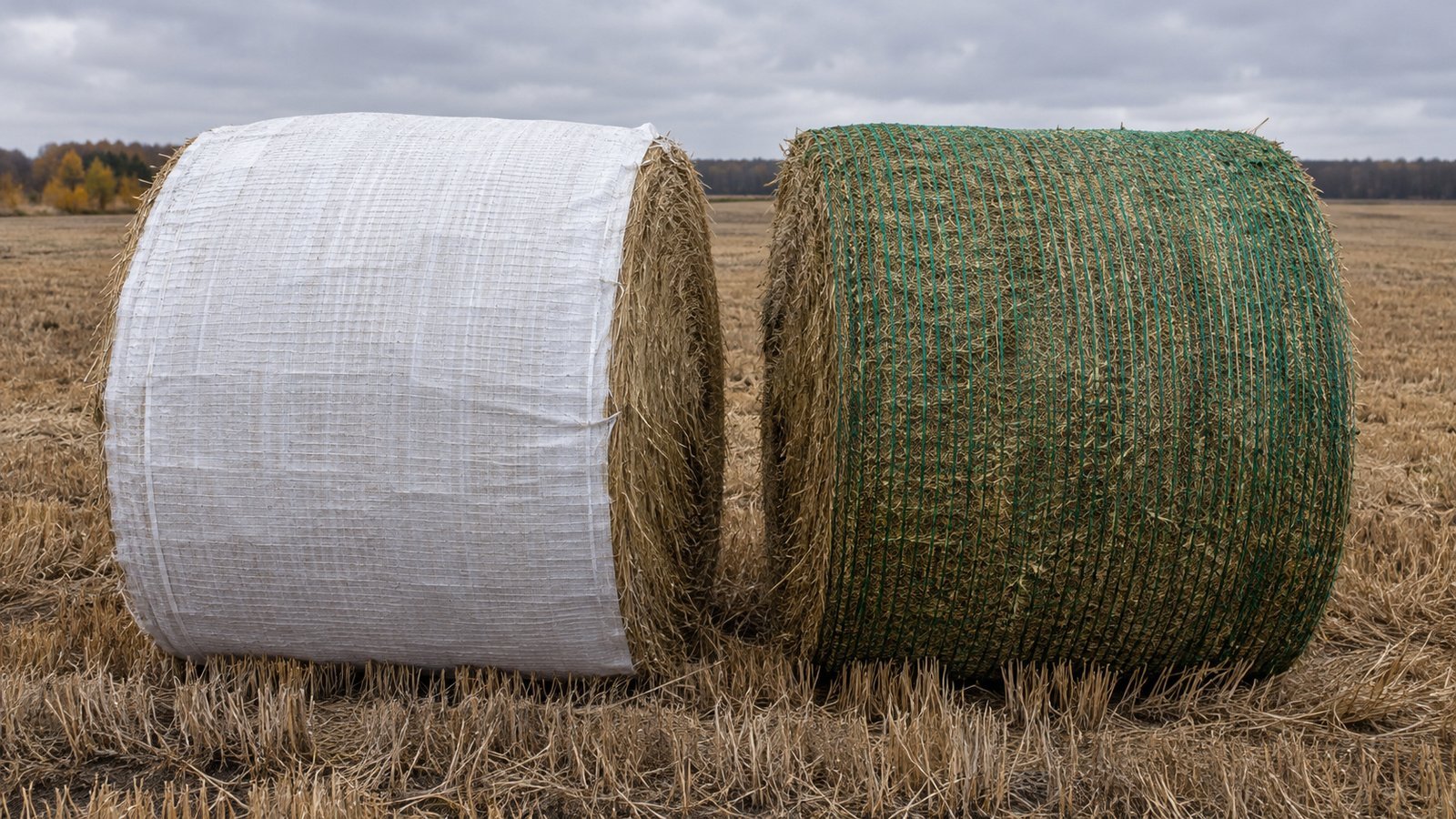
Net wrap and woven polypropylene sheet both end up on hay, and both get called "bale wrap", so buyers compare them as if choosing between them. That framing is wrong, and it leads to the single most common complaint in this category: someone bought net wrap and then discovered their hay got wet.
What net wrap is for
Net wrap is applied by the baler, on the move, as the bale forms. Its job is containment: hold the bale in its cylindrical shape so it can be handled, stacked and transported without falling apart.
It is an open mesh. You can see through it. That openness is deliberate — it lets the bale shed field heat and moisture in the days after baling, which is exactly what you want from freshly cut forage.
It is also, obviously, not waterproof. Rain goes straight through an open mesh. Net wrap was never intended to keep weather off anything, and a bale left in the open with nothing but net on it will take up water through the whole of its outer surface.
What woven PP sheet is for
Woven polypropylene sheet is a solid fabric, applied after stacking, usually by hand. Its job is weather protection: keep precipitation off the top and shoulders of a stack that has to live outdoors.
It is not containment. It does not hold a bale together and will not substitute for net. It goes over the top of bales that are already netted.
| Net wrap | Woven PP sheet | |
|---|---|---|
| Job | Hold bale shape | Keep weather off the stack |
| Applied | By baler, per bale, in field | By hand, over a built stack |
| Structure | Open mesh | Solid woven fabric |
| Sheds rain | No | Yes |
| Reusable | No — cut off and discarded | Yes — seasons, if handled well |
| Replaces the other | No | No |
So what does a typical operation use?
Both, in sequence. Net wrap off the baler to hold the bales. Stack them, crowned. Woven PP cover over the stack for the storage period. The two products never compete; they operate at different points in the process.
The only case where you genuinely choose is individually wrapped silage bales in sealed plastic film, which is a different preservation method entirely — anaerobic fermentation rather than dry storage. That is not a cover decision and nothing on this page applies to it.
Where the confusion comes from
Three things:
- Vocabulary. "Wrap" covers net, stretch film, and sheet. Three different products.
- Both are plastic and both are on hay. Superficially similar, functionally unrelated.
- Suppliers sell both and do not always make the distinction clearly on a product page.
The practical consequence
If your hay is netted and stored outdoors uncovered, net wrap is doing its job and you have no weather protection at all. The outer layer of every bale is exposed, and in a wet autumn you will lose the shell of each bale in the outer courses.
The fix is not better net. It is a cover over the stack. Net wrap cannot be upgraded into weather protection, because the mesh that makes it net is the reason water goes through it.
If you are buying a cover
Size it from the stack, not from the bale count — the method is here. Specify hem, grommets and corner reinforcement, not just fabric weight. Crown the stack before you cover it. Leave the base open so trapped moisture can escape.