
Woven PP Bale Covers vs Plastic Bale Wrap
Bale covers and bale wrap sound like the same product and do opposite jobs. A woven polypropylene cover is breathable and sheds water while letting moisture vapour escape. Plastic bale wrap is airtight and seals moisture in on purpose. Which one you need is decided by one number: the moisture content of the bale when you baled it.

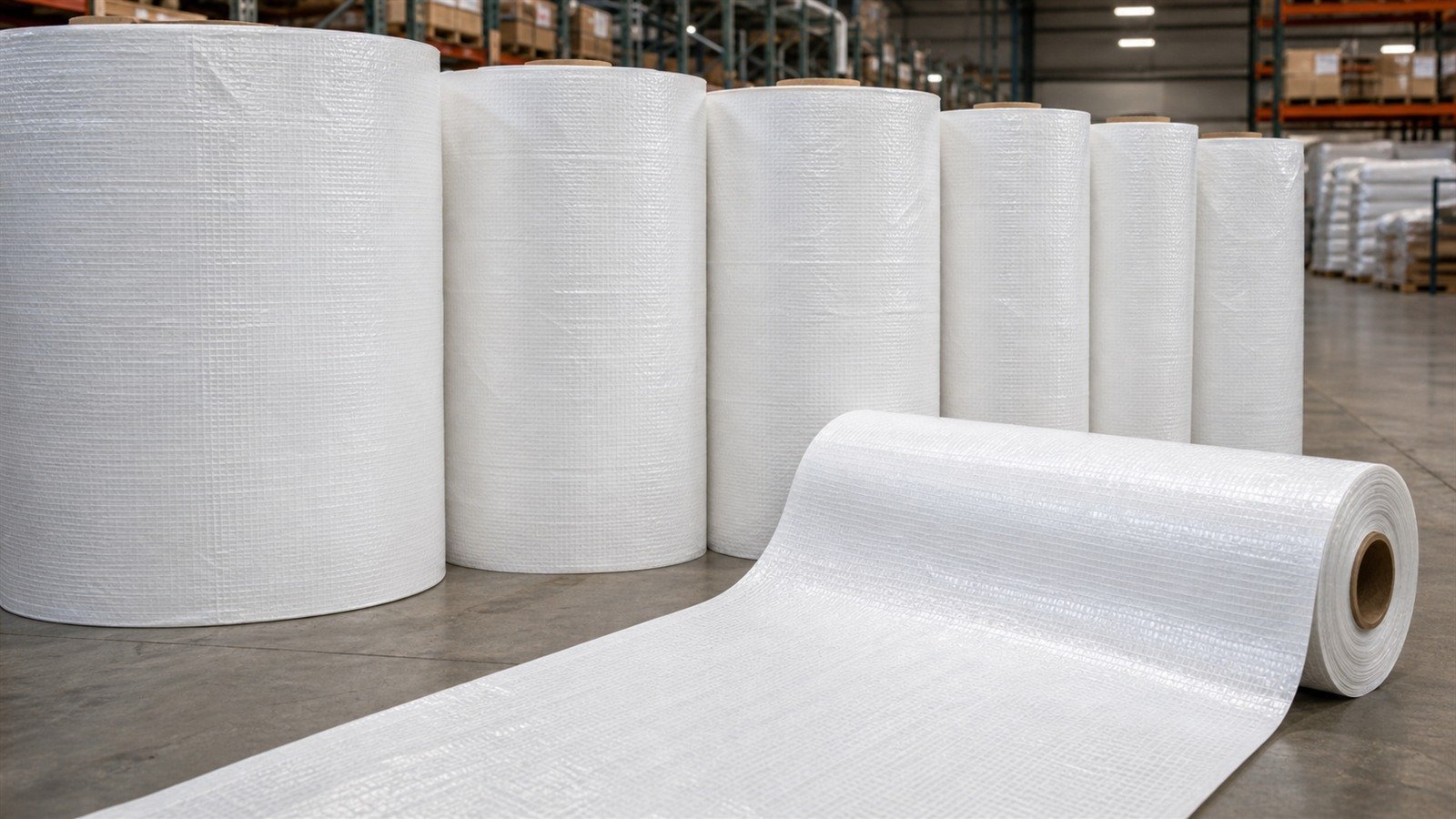
Bale covers and bale wrap sound like the same product and do opposite jobs. A woven polypropylene cover is breathable and sheds water while letting moisture vapour escape. Plastic bale wrap is airtight and seals moisture in on purpose. Which one you need is decided by one number: the moisture content of the bale when you baled it.
Get it backwards and you either spoil dry hay with trapped moisture, or you fail to ferment a high-moisture crop that needed sealing. Both are expensive and both are common.
The deciding question: how wet was the crop?
| Dry hay | Baleage / silage | |
|---|---|---|
| Moisture at baling | Low — cured down in the field before baling | High — baled deliberately wet |
| Preservation mechanism | Dryness. Too little water for spoilage organisms. | Fermentation. Anaerobic, acidifying. |
| What the covering must do | Shed rain, let vapour out | Exclude oxygen completely |
| Correct product | Breathable woven PP cover or tarp | Airtight stretch film |
| Reusable? | Yes, across multiple seasons | No, single-use consumable |
Exact moisture thresholds vary with bale type, density, and crop, and your provincial agriculture extension service is the right source for the numbers that apply to your operation. In Ontario, the Ontario Ministry of Agriculture, Food and Agribusiness publishes forage storage guidance; other provinces run equivalent programs.
The principle does not vary, though. Dry hay is preserved by being dry, so anything that stops it giving up residual moisture works against you. Baleage is preserved by fermenting without oxygen, so anything that lets air in works against you.
Why sealing dry hay in plastic goes wrong
Even properly cured hay carries residual moisture, and a stack continues to give off vapour for weeks after baling. It also goes through daily temperature cycles — warm afternoon, cold night — and each cycle drives condensation on the underside of any impermeable sheet laid over it.
Seal that stack under airtight film and the water has nowhere to go. It condenses, runs back down onto the bales, and sits there. The outcomes are predictable:
- Surface mould on the top and shoulders of the stack, where condensation collects
- Heating, as microbial activity picks up in the wetted layer
- Dust and spoilage that makes the affected bales unsuitable for feeding, particularly to horses
This is the same physics that ruins lumber under polyethylene stretch film, and it is the reason breathable woven fabric exists as a category at all.
What a woven PP bale cover actually is
A woven polypropylene bale cover is fabric, not film. Flat polypropylene tapes are woven on a circular loom into a sheet, which gives it three properties that matter here:
- It sheds liquid water but passes vapour. Rain runs off the weave; moisture vapour from the bales moves out through it. That is the entire point.
- It survives being handled. Woven tape fabric resists tearing and puncture in a way that film does not — it takes wind flap, tie-downs, and the occasional snag on a bale edge.
- It holds up to sunlight. Our fabric uses a HALS (Hindered Amine Light Stabilizer) additive package compounded into the polypropylene resin during manufacture rather than applied to the surface, so the UV protection runs through the fabric instead of wearing off it.
Because it is reusable, the economics are different from film. A cover that comes off in spring, gets folded, and goes back on the following autumn is amortised across seasons rather than consumed each year.
The cost of leaving bales uncovered
The comparison most operations should be running is not cover-versus-wrap. It is cover-versus-nothing, because a great many round bales still sit outside uncovered through a Canadian winter.
Weathering losses on unprotected outdoor bales are well documented by forage extension programs and are substantial — the weathered outer layer of a round bale represents a disproportionate share of its volume, and losses climb where bales sit directly on wet ground rather than on a drained pad or pallets.
Two things drive the loss, and a cover only fixes one of them:
- From above — rain and snowmelt soaking into the top of the bale. This is what a cover solves.
- From below — wicking up from wet ground. A cover does nothing here. Bales need to sit on gravel, pallets, or ground cover fabric.
Operations that cover the top and leave the bottoms sitting in mud usually conclude that covering did not help much. It is worth solving both.
Practical points for covering a stack
- Stack for shedding. A peaked or rounded stack sheds water. A flat top collects it, and standing water will find any gap.
- Overhang the sides, but not to the ground. Cover the shoulders where rain runs, and leave the lower sides open so air can move through the stack.
- Secure against wind, not just gravity. Wind flap does more damage to covers over a winter than sunlight does. Tie down properly and check after storms.
- Cut to the stack. Roll goods are cut to length on site, which means one roll covers stacks of varying lengths without paying for fitted sizes.
- Fold and store dry. A cover put away damp at the end of the season is a cover with mould on it next autumn.
Which product to ask for
If you are storing dry hay or straw — round bales, large squares, or stacks — you want a breathable woven PP cover. Sackora supplies these as hay tarps and bale cover rolls, cut to length on site from wide-format rolls, in HALS UV-stabilised woven polypropylene.
If you are making baleage or silage, you need airtight stretch film designed for fermentation, which is a different product category and not one we supply. Ask your forage equipment dealer.
If you are covering equipment, stockpiles, or mixed farm storage rather than feed, the same woven fabric works and is covered under woven PP covers and stockpile covers.
Sackora has been supplying woven polypropylene to Canadian agricultural operations since 2007, shipping from our Richmond Hill, Ontario warehouse. Tell us your bale size, stack configuration, and how many seasons you want the cover to last, and we will quote the right width and fabric weight.