
Laminated vs Unlaminated Woven PP Bags
Lamination bonds a thin film layer to woven polypropylene fabric. It buys you a moisture barrier, a better print surface and improved sift resistance. It costs you breathability, some money, and a little recycling simplicity. Whether that trade is worth making depends almost entirely on one question: does your product need to breathe?

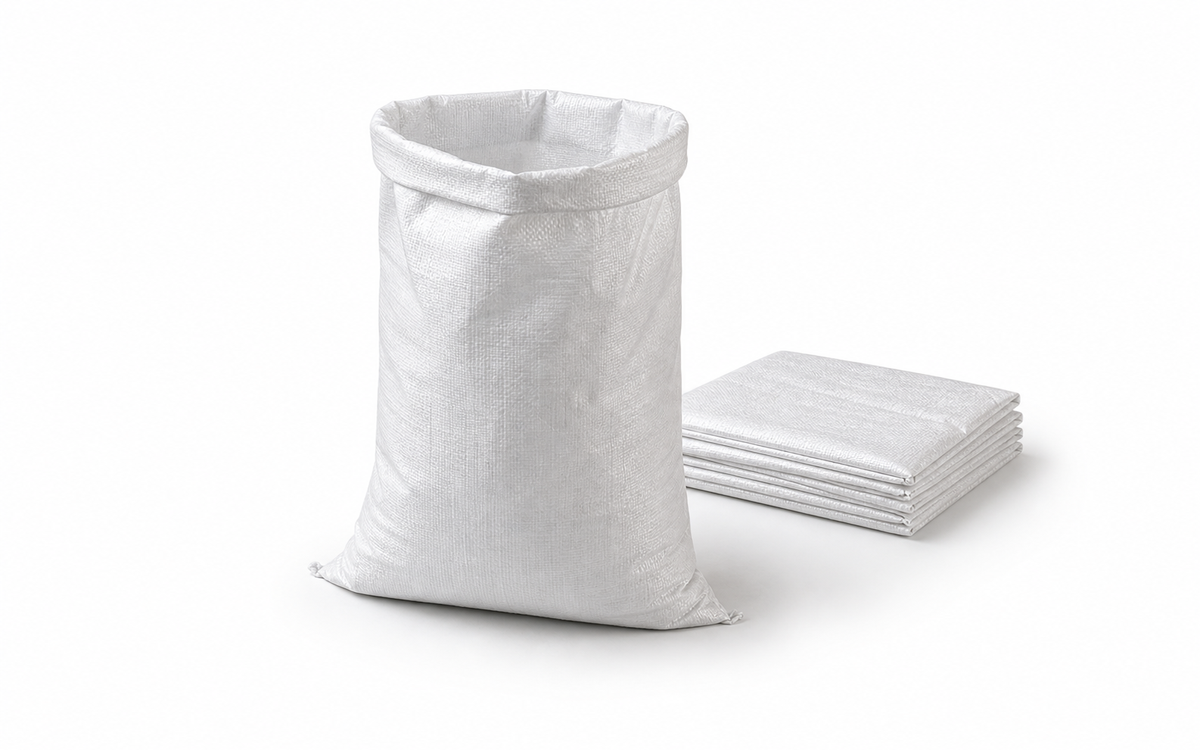
Lamination bonds a thin film layer to woven polypropylene fabric. It buys you a moisture barrier, a better print surface and improved sift resistance. It costs you breathability, some money, and a little recycling simplicity. Whether that trade is worth making depends almost entirely on one question: does your product need to breathe?
This guide works through that decision, and then through the choices that follow once you have made it.
Start with breathability, not with barrier
Most specification conversations start at "how much moisture protection do I need?" That is the second question. The first is whether the product actively needs to release moisture or heat, because if it does, lamination is not an upgrade — it is a defect.
| Product behaviour | Examples | Laminate? |
|---|---|---|
| Respires or releases moisture | Potatoes, onions, firewood, some feeds | No — needs open or ventilated fabric |
| Damaged by ambient humidity | Cement, tile adhesive, sugar, fertiliser | Yes — barrier is the primary requirement |
| Indifferent to humidity | Aggregates, sand, many minerals | Optional — decide on print and sift instead |
| Sold off a retail shelf | Consumer dry mix, pet food, garden products | Usually — for print quality as much as barrier |
The expensive mistake in this category is laminating something that needed airflow. Sealing a respiring product in a barrier bag produces condensation inside the pack and then spoilage — the problem is covered in more depth in woven poly potato bags.
What lamination actually gives you
- Moisture barrier. The main reason. Unlaminated woven fabric passes vapour through the weave freely.
- Print surface. Woven fabric has texture; laminate gives a smooth surface that holds fine detail and photographic images.
- Sift resistance. A continuous film layer closes the fabric interstices that fine powders escape through.
- Some added strength and abrasion resistance, though this is secondary — the woven substrate is doing the structural work.
PE or BOPP
| PE lamination | BOPP lamination | |
|---|---|---|
| Moisture barrier | Good | Good |
| Print quality | Moderate | High — gloss, photographic detail |
| Relative cost | Lower | Higher |
| Typical use | Trade and industrial packaging | Retail and branded packaging |
| Material mix | PP fabric + PE film — two polymers | PP fabric + PP film — closer to mono-material |
The short version: if the bag goes to a contractor who will empty it into a mixer, PE lamination does the job. If the bag has to sell itself on a shelf beside competitors, BOPP earns its premium on appearance.
The de-aeration requirement
This catches producers moving from paper to laminated woven PP, and it is worth stating plainly because it is not obvious.
Powders are filled fluidised, and a large volume of air has to leave the bag as product enters. Paper is porous and vents naturally. Laminated woven PP is sealed by design and does not. Laminated bags for powder products therefore need engineered de-aeration — normally fine micro-perforation of the laminate — or they will not fill at line speed.
If you are specifying a laminated bag for any powder, ask for the de-aeration method and state your filling equipment and line speed in the enquiry. The detail is covered further in PP bags for cement.
Cost, in context
Lamination adds cost per bag. Whether that matters depends on what a moisture failure costs you, and the comparison is rarely close where the product is genuinely moisture-sensitive.
A cement or adhesive producer whose product hydrates in the bag loses the material, the freight, the customer relationship, and sometimes a warranty claim on the installed work. Against that, the per-bag cost of lamination is small. Conversely, laminating aggregate that does not care about humidity is money spent for a tidier print.
The useful framing is not "what does lamination cost?" but "what does a wet pallet cost?"
Design for recycling
Worth knowing if recyclability is on your brief, as it increasingly is for retail-facing products.
Woven polypropylene is straightforwardly recyclable as a material. Recycling streams work best on mono-material inputs — a package made of one polymer family rather than several bonded together.
A PP woven fabric with a BOPP laminate is polypropylene bonded to polypropylene, which stays close to mono-material. A PP woven fabric with a PE laminate mixes two polymer families, which is more difficult to process. Neither is unrecyclable, and collection infrastructure varies by region in Canada, but the distinction matters if you are making design-for-recycling claims.
Our position on the material generally is set out at recyclability of woven polypropylene.
A short decision path
- Does the product respire or need airflow? If yes, stop — specify ventilated or mesh fabric.
- Is it damaged by humidity? If yes, laminate. For long storage or ocean freight, consider a sealed liner as well.
- Does it sell off a shelf? If yes, BOPP. If not, PE.
- Is it a powder? If yes, specify de-aeration and state your filling line.
- Are you making recyclability claims? If yes, weigh BOPP over PE for the mono-material argument.
Supply in Canada
Sackora supplies laminated and unlaminated woven polypropylene bags across Canada and the United States from our Richmond Hill, Ontario warehouse. Configurations sit at laminated bags, BOPP printed bags, and the full range at PP woven bags.
Tell us your product, how long it sits in storage, and where it ends up — a warehouse, a job site, or a retail shelf — and we will recommend a construction rather than simply quoting the one you asked for.