
Choosing a PP Woven Tarpaulin
Most tarpaulins are bought on size and price, and then replaced annually because the specification was never matched to the job. Covering a stockpile for a season, a pallet in a yard and a load on a trailer are three different duty cycles, and they want three different covers.

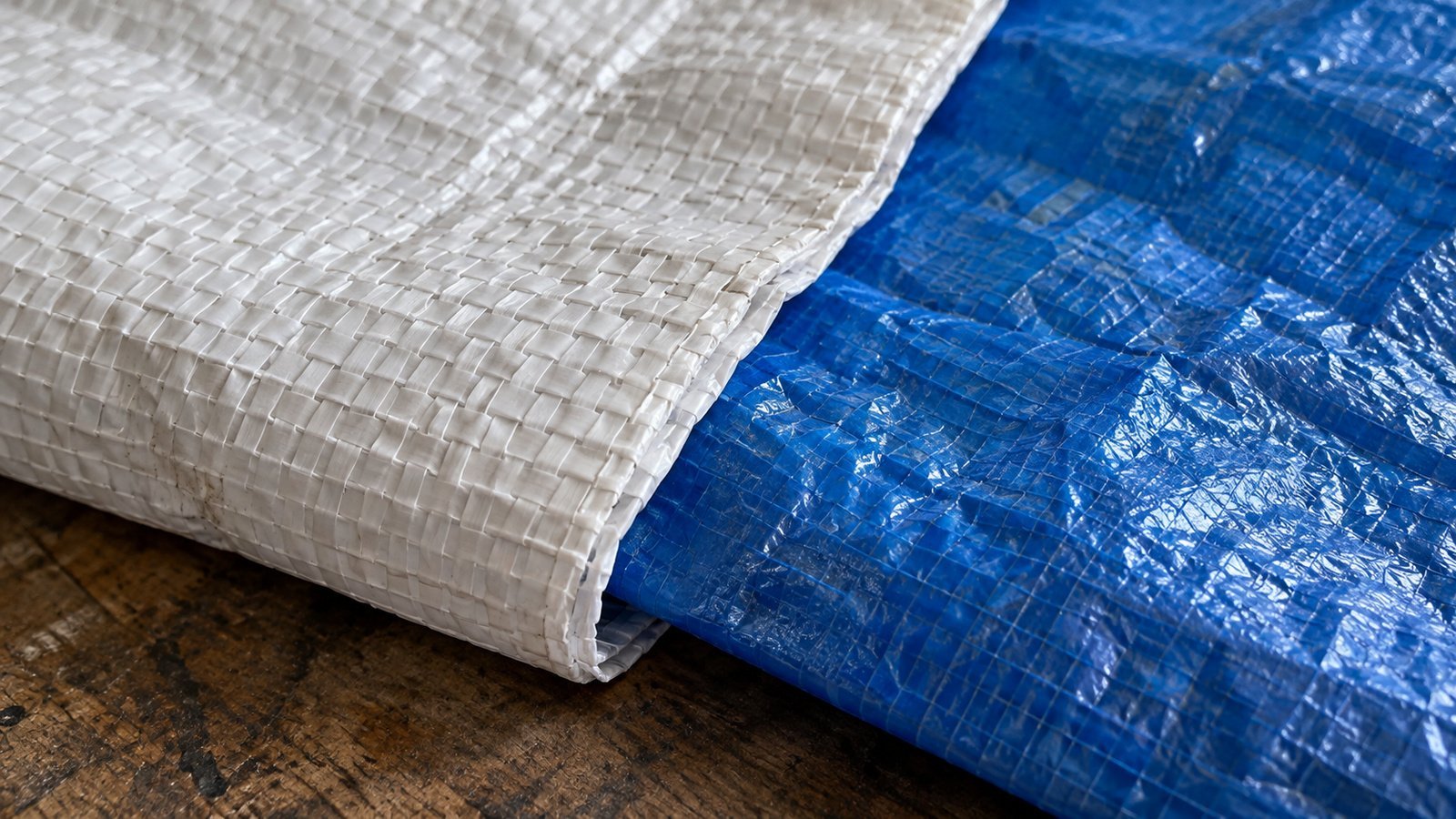
Tarpaulins get bought on size and price, and then replaced every year because nobody matched the specification to what the cover actually has to do. A sheet protecting a stockpile for one winter and a sheet going on and off a trailer twice a week are not the same purchase, even at the same dimensions.
Start with the duty cycle. Everything else follows from it.
Three duty cycles
| Duty | Dominant stress | What to prioritise |
|---|---|---|
| Static seasonal cover stockpile, bale stack, equipment | UV exposure and sustained wind load | UV stabilisation, hem and grommet strength, corner reinforcement |
| Repeated handling pallet covers, yard use | Abrasion, folding, snagging | Fabric weight, edge durability |
| Transit loads on trailers | High-cycle flutter and strap cutting | Secure every edge; weight helps less than you expect |
A cover specified for one of these and used for another is the usual reason a tarpaulin disappoints.
Why woven polypropylene
Woven PP is made from flat polypropylene tapes woven over and under each other. The woven structure resists stretch in both directions, which is what you want in a cover that stays rigged for months and has to keep shedding water as whatever is underneath it settles.
If you are weighing woven PP against a conventional poly tarp, we have a fuller comparison in the materials reference — it covers the construction differences in more detail than belongs here.
What to specify
Fabric weight
In GSM. Drives abrasion and puncture resistance in the body of the sheet. Ask for the number rather than a grade name — grades are internal to whoever invented them.
Hem
Folded and double-stitched. Every tie-down load passes through the hem, and a heat-cut edge gives grommets nothing to pull against. More covers fail at the hem than anywhere else, which is why this outranks fabric weight in practice.
Grommets
Metal, set through the reinforced hem, consistent spacing. Closer spacing on exposed sites, because each tie point carries less load that way.
Reinforcement
Corners first. Corners take the highest load in wind and are where covers fail.
UV stabilisation
A HALS additive package for continuous outdoor service. Ask what is in the fabric and against which test standard. Treat advertised lifespans in hours with caution — they are accelerated laboratory results, and the supplier has not seen your site, latitude or exposure.
Size
Object dimensions, plus the drop you need on each side, plus hem allowance. Never the footprint alone. A cover sized to the footprint sits on top of the thing and protects the top only.
Three mistakes worth avoiding
Buying on nominal width. Usable width after hemming is less than nominal. If a dimension is critical, ask for the finished usable figure.
Over-tensioning. A drum-tight cover has nowhere to go when a gust loads it and puts the whole shock into the grommets. Slightly slack sheds wind better and survives longer.
Sealing the object completely. Anything that holds moisture — hay, timber, damp aggregate — will release it under a sealed cover, where it condenses overnight and comes back down. Leave a path for air at the base.
What to send with an enquiry
- What you are covering, and its dimensions
- Indoors, sheltered yard, or fully exposed
- How long it stays on, and how often it comes off
- Whether anything sharp contacts the fabric
- Any dimension that is a hard constraint
That is enough to specify properly. Without the duty cycle, any quote is a guess at the right fabric.