Static-dissipative bulk bags engineered for environments with flammable powders, combustible dust, and volatile atmospheres. OSHA and IEC 61340-4-4 compliant.
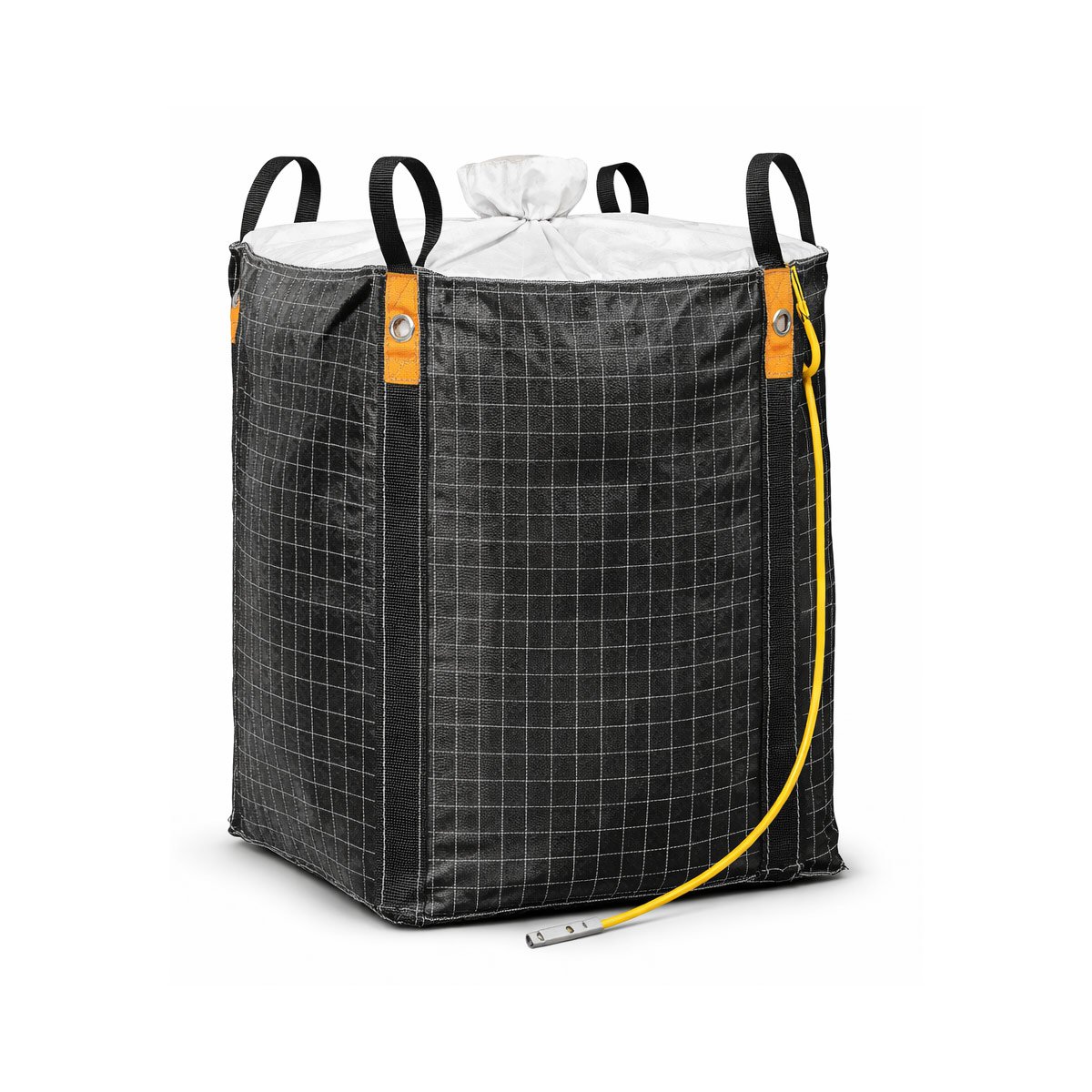
All specifications are fully customizable. Contact us to discuss your exact requirements.
| Material | Woven Polypropylene with conductive or dissipative elements |
|---|---|
| Type C Construction | Interconnected conductive threads, grounding point on bag |
| Type D Construction | Quasi-static dissipative fabric — no grounding required |
| Safe Working Load | 500 – 2,000 kg |
| Safety Factor | 5:1 or 6:1 |
| Standard Dimensions | 90 × 90 × 110 cm (custom available) |
| Fabric Weight | 170 – 230 GSM |
| Electrostatic Standard | IEC 61340-4-4 |
| Top Options | Duffle top, spout top, or open top |
| Bottom Options | Flat bottom or spout bottom |
| Testing Standard | ISO 21898 |
Chemical plants handling fine powders, catalysts, and intermediates in the presence of flammable solvents or vapours require static-safe packaging at every stage. Type C and Type D FIBC bags prevent electrostatic ignition during filling, transport, and discharge — a non-negotiable safety requirement in these facilities.
Active pharmaceutical ingredients and excipients are often fine powders with low minimum ignition energy. Anti-static FIBC bags protect both product integrity and personnel safety during material handling. Type D bags are particularly valued in pharma because they eliminate the risk of operator error from improper grounding.
Any facility handling materials classified as combustible dust — including flour, sugar, metal powders, toner, and coal dust — needs FIBC bags that prevent static discharge. Canadian OHSA regulations and NFPA 652 require facilities to assess dust hazards and use appropriate static-safe containers throughout their material handling chain.
More Products
Custom woven polypropylene sacks from 5–50 kg. Food-grade, printed, and laminated options for every industry.
Learn More →UV-stabilized woven polypropylene sleeves and rolls for protecting wood products during storage and transport.
Learn More →Bespoke dimensions, specialty printing, and unique configurations engineered to your exact specification.
Learn More →Type C bags have conductive threads woven into the fabric that must be connected to an electrical ground during filling and discharge. Type D bags use a special dissipative fabric that safely neutralizes static charge without any grounding connection. Type D eliminates the risk of operator error from forgetting to connect the ground cable, but Type C is generally lower in cost.
Type D is recommended when grounding cannot be reliably guaranteed — for example, in field operations, remote sites, or facilities where multiple operators handle bags and grounding compliance is difficult to enforce. Type D provides the same level of static protection without depending on a grounding connection.
Yes, but the liner must also be anti-static. A standard PE liner inside a conductive bag can accumulate its own static charge, negating the bag's protection. We supply conductive bags with anti-static liners specifically designed for this purpose.
Our Type C and Type D bags are tested and certified to IEC 61340-4-4, the international standard for electrostatic properties of flexible intermediate bulk containers. All bags are also ISO 21898 tested for structural performance. Test certificates are provided with each order.
Get a fast, no-obligation quote. We typically respond within 24 hours.